Hours: |
|
Mon-Sat 10 - 3 |
What's New: |


Contact SMHS















In the News |
|||||||
|
Tuesday, February 18, 2003
Just as Montag captured images on glass plates, Mark Tolonen, the new curator of the Seaside Museum and Historical Society, is capturing them on computer. Gradually he has been scanning the negatives, printing copies on paper and compiling information so it can be readily searched and retrieved. So far, he has scanned 427 images. “Scanning the museum’s Montag collection is a fun example of using technology to share information and promote history,” Tolonen says. “I have some experience building interactive Web sites, and hope to eventually have the museum’s collection online.” The goal is no small task. With each museum item or photograph on one sheet of paper, and each of those sheets placed in three-inch notebook binders, the stack extends along a shelf more than seven feet. But the work of a registrar is important, Tolonen says. As more records are entered in the computer, the museum staff will be able to more efficiently keep track of the artifacts in its collection, avoid duplication when people offer to donations, and limit how much potentially delicate items need to be handled. Rediscovering the past More than 20 museum supporters pulled together and purchased them, bringing the total number of Montag images in the museum’s collection to nearly 2,000. Recording them digitally for the computer provides a variety of bonuses, Tolonen says. The museum staff can electronically send the images to others, and it can magnify details.
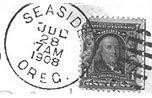
for example, the logo of the company that made it or even the arrangement of symbols surrounding the words “Place Stamp Here” can provide clues about the date because the symbols changed over time. But photographic collections represent only one facet of the museum and historical society, based at 570 Necanicum Drive. The museum includes exhibits highlighting local geology, Native American culture and Seaside’s history, primarily through World War II. Its nonprofit organization also continues to furnish the adjacent 1912 beach cottage known as the Butterfield House with furnishings of that time. Tolonen, whose part-time role as curator is the only paid position for the organization, is the first to credit more than 35 volunteers, its board of directors and 225 members. “It’s a great team.” History made personal His grandparents and great-grandparents had lived in Astoria, and he remembers visiting the Columbia River Maritime Museum as a child, when it was located where the Heritage Museum is now. After earning a bachelor’s degree in history and completing a graduate program in cultural resource management in Victoria, British Columbia, Tolonen returned to the North Coast to work at the Maritime Museum. “I had my degree in history, but didn’t particularly want to be a classroom teacher,” he explained. “I enjoy the educational aspect of sharing history, but for me it’s rewarding to work with the artifacts and historical resources.” Tolonen was curator of the Clatsop County Historical Society for three years in the mid-1990s before turning his focus to the Computer Information Center in Astoria, a grant-funded position with a limited timeframe. He spent a year in the private sector building Web sites, including a site for the Compleat Photographer. “I’m hoping I can take these skills to the Seaside Museum,” he said. Other projects under way that particularly excite Tolonen include the development of kits for classrooms, as proposed by volunteer Micki Towell. The kits contain artifacts, utensils and once everyday appliances that help observers to envision the past. Rather than using replica materials, “the contents are old, the Real McCoy,” Tolonen says. Even if the objects do not have a story unique to Seaside, in which case they might be on display, they can still be valuable for offering a sense of the culture of the local past, he says. “It’s another way to make the story of history enjoyable.”
|
|||||||
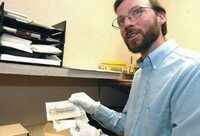
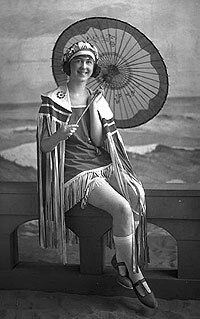
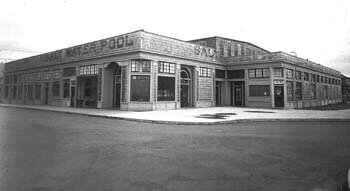 Photo courtesy of Seaside Museum and Historical Society